
Natural stone surfaces like marble, travertine, limestone, and granite add elegance and durability to homes and businesses. But over time, many property owners notice dull spots, discoloration, or marks that seem impossible to remove.
Two of the most common issues are etching and staining. While they may look similar at first glance, they are caused by completely different problems and require different solutions.
Understanding the difference is the first step toward restoring the beauty of your stone surfaces.
What Is Etching on Natural Stone?
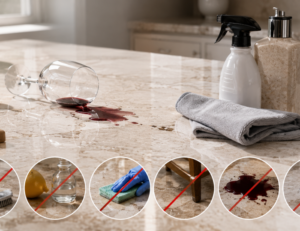
Etching occurs when acidic substances react with calcium-based stone, causing a chemical reaction that dulls or damages the surface finish.
This is especially common on softer stones like marble, travertine, limestone, and onyx. Even everyday items can cause etching.
Common causes of etching include:
-
Lemon juice or citrus cleaners
-
Vinegar-based cleaning products
-
Wine, soda, or coffee spills
-
Tomato sauces
-
Harsh household cleaners
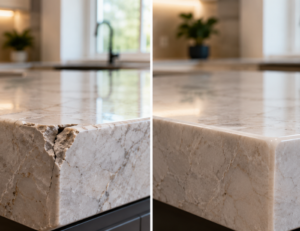
Instead of leaving a dark spot like a stain, etching usually creates dull, cloudy, or lighter patches on the stone.
These marks are not sitting on the surface—they are actual damage to the stone finish. Because of this, simple cleaning will not remove them.
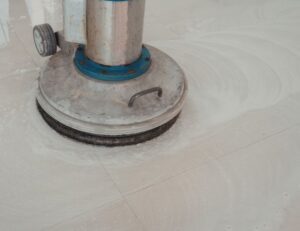
Professional services like stone polishing or full stone restoration are typically needed to repair etched areas and restore the original shine.
What Is Staining on Natural Stone?
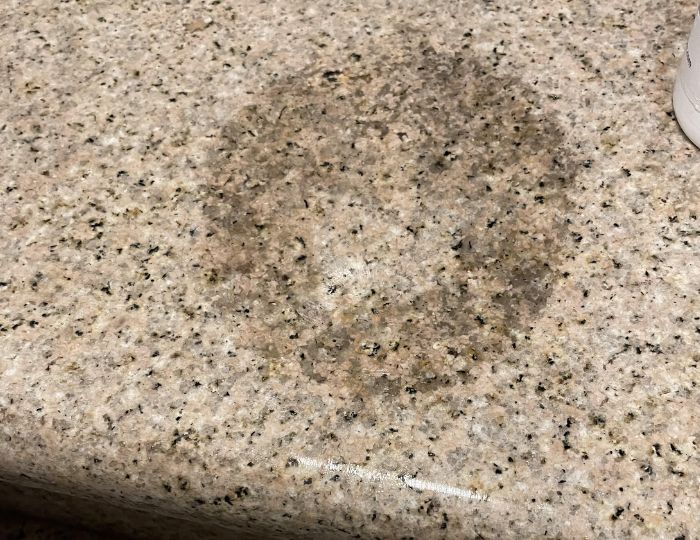
Staining happens when a substance penetrates the pores of the stone, leaving behind discoloration.
Unlike etching, stains are usually darker than the surrounding surface and can vary in color depending on the substance that caused them.
Common staining sources include:
-
Cooking oils and grease
-
Coffee or tea
-
Wine
-
Rust from metal objects
-
Dirt and organic debris
Because natural stone is porous, liquids can soak into the material if it isn’t properly protected.
Professional stone cleaning can often remove many stains. In more severe cases, deeper treatment or restoration may be required.
Preventative protection through proper stone sealing helps reduce the likelihood of stains forming in the first place.
Key Differences Between Etching and Staining
While both problems affect the appearance of stone surfaces, their causes and solutions are very different.
Etching:
-
Caused by acid reacting with the stone
-
Leaves dull or cloudy marks
-
Damages the surface finish
-
Requires polishing or restoration
Staining:
-
Caused by liquids soaking into porous stone
-
Leaves darker discoloration
-
Affects the stone internally
-
Often removable through professional cleaning
If you’re unsure which problem you’re dealing with, a professional inspection can quickly identify the issue and determine the best solution.
Which Stones Are Most Vulnerable?
Not all stone reacts the same way. Some materials are far more susceptible to etching or staining.
Calcium-based stones are especially vulnerable to acid damage, including:
Harder stones such as granite countertops are more resistant to etching but can still develop stains if they aren’t properly maintained.
Regular maintenance and sealing are key to protecting any natural stone surface.
How Professionals Fix Etched or Stained Stone
Because stone damage affects the material itself, DIY solutions rarely deliver consistent results.
Professional restoration specialists use specialized equipment and techniques to correct the problem while preserving the integrity of the stone.
Depending on the issue, the repair process may include:
-
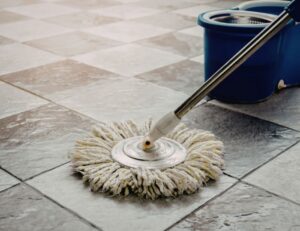
Deep stone cleaning to remove contaminants
-
Mechanical honing and stone polishing to eliminate etch marks
-
Full stone restoration for severely damaged surfaces
-
Protective stone sealing to prevent future stains
These processes carefully resurface the stone, restoring its natural beauty and smooth finish.
Preventing Future Stone Damage
While natural stone is durable, proper care goes a long way in preserving its appearance.
A few simple habits can dramatically reduce the risk of both etching and staining.
Helpful prevention tips include:
-
Avoid acidic cleaners like vinegar or lemon-based products
-
Clean spills quickly before they soak into the surface
-
Use stone-safe cleaning products
-
Keep stone surfaces regularly sealed
-
Schedule periodic professional maintenance
Routine care combined with professional stone maintenance helps ensure your surfaces remain beautiful for years.
If you’re already noticing dull spots, discoloration, or damage, a professional evaluation can determine whether cleaning, polishing, or restoration is the right solution.
You can also view examples of restored surfaces in the company’s project gallery to see how professional stone care can dramatically improve worn or damaged stone.
TL;DR / Key Takeaways
-
Etching is caused by acidic substances reacting with calcium-based stone and leaves dull or cloudy marks.
-
Staining happens when liquids soak into porous stone and cause discoloration.
-
Cleaning removes many stains, but etching requires polishing or restoration.
-
Stones like marble, travertine, limestone, and onyx are especially prone to etching.
-
Prevent damage by using stone-safe cleaners, sealing surfaces, and scheduling professional maintenance.