
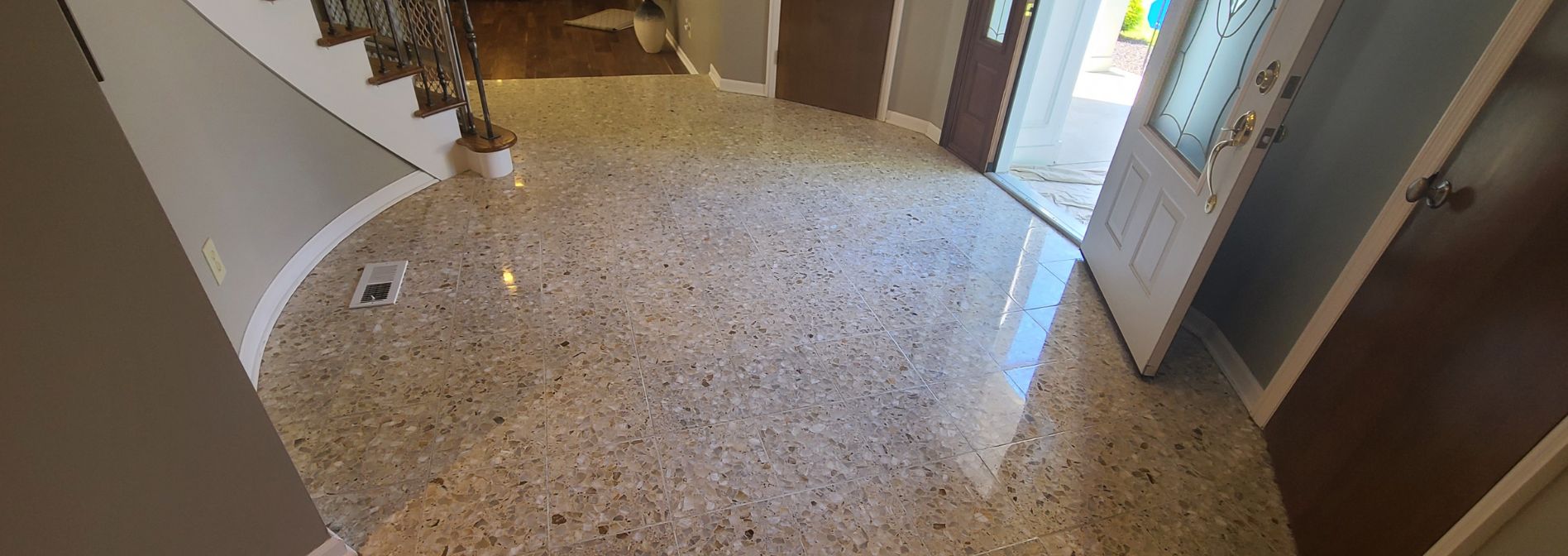
How To Clean Your Stone Surfaces In Cleveland (Floors, Counters & More)
You love the look of your stone, but you might also be a little scared of it. One wrong cleaner and your shiny marble can turn dull. Road salt can chew up your entry floor. A spilled glass of red wine can leave a dark shadow on your kitchen island.
If you live in Cleveland or Northeast Ohio, you deal with snow, road salt, humidity, and plenty of grit. Those things are tough on stone surfaces. The good news is that with the right habits, you can keep your floors, counters, and showers looking bright without harsh chemicals or guesswork.
This guide walks you through simple daily cleaning, deeper cleaning, and how to know when it is time to bring in a stone pro. It covers common materials like marble, granite, travertine, limestone, slate, and ceramic or porcelain tile, so you can clean each one with confidence.
Stone Medics has more than 40 years of experience restoring and maintaining stone and tile across Cleveland. If your surfaces are already scratched, stained, or dull, expert help is close by. First, let’s focus on what you can safely do on your own.
Know Your Stone: The First Step To Cleaning Floors And Counters The Right Way
Before you grab a cleaner, you need to know what you are cleaning. Different stones react very differently to the same product.
Marble can burn from lemon juice. Granite can shrug off acid but grab oil. Travertine can soak up almost anything. Tile might be fine, but the grout around it can break down if you use bleach too often.
You do not have to become a geologist. You just need a rough idea of which group your stone fits into so you can pick safe methods.
How To Tell If You Have Marble, Granite, Travertine, Or Tile
Start with a simple look and feel test.
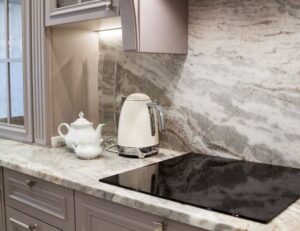
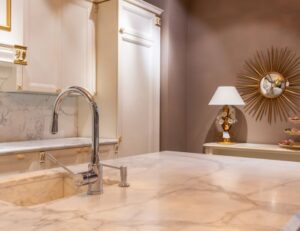
- Marble: Often has soft, flowing veins and a classic “luxury” look. It feels smooth and cool. Marble scratches and etches easily. If you see dull rings where a bottle or glass sat, it is likely marble.
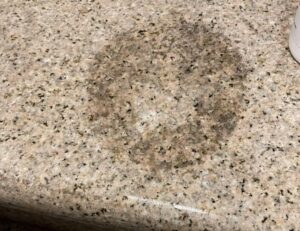
- Granite: Looks more speckled or grainy, almost like it has tiny crystals. It is very hard and less likely to scratch. It usually stains before it etches.
- Travertine and limestone: Often beige, cream, or soft earth tones. They can have tiny holes or pits. They feel softer underfoot and can wear faster in busy areas.
- Slate: Has a layered, rustic look, sometimes uneven. You may see color shifts from gray to green, orange, or rust. The surface can flake a little at the edges.
- Ceramic and porcelain tile: Man-made, usually very consistent from tile to tile. Often has printed patterns. The tiles are not as sensitive as natural stone, but grout lines still need gentle care.
If you are not sure, you can test a hidden corner with a mild, stone-safe cleaner and watch how it reacts. You can also snap a photo and ask a professional for help before trying stronger products.
Polished, Honed, Or Textured: Why The Finish Changes How You Clean
The finish changes how dirt shows and how careful you need to be.
- Polished: Shiny, mirror-like surface. This is common on marble, granite, and some limestone. It reflects light and also reflects every etch, scratch, and streak. Polished marble and limestone need very gentle products and soft cloths.
- Honed: Smooth but not glossy. It has a soft, satin look. Honed stone is a bit more forgiving. Small scratches do not show as much, but it can still etch and stain.
- Textured or tumbled: Has grip or a “bumpy” feel. You see this on slate, tumbled travertine, and some outdoor or shower tiles. Dirt and soap scum like to hide in the pits and grooves, so you will need more rinsing and a soft brush.
Polished stone rewards careful, light-touch cleaning. Textured stone needs more attention to rinsing so you do not leave cleaner or soil sitting in the low spots.
Cleveland Conditions That Affect Your Stone Surfaces
Cleveland is tough on floors and showers.
- Road salt and de-icers from winter streets and sidewalks stick to shoes, then grind into stone and grout.
- Grit and sand get tracked in from driveways, garages, and entryways and act like sandpaper on polished stone.
- Lake-effect moisture and humidity keep floors, grout, and showers damp longer. This helps mildew, soap scum, and hard water spots build up.
- Temperature swings move moisture in and out of tiny pits and grout joints.
This mix is why Northeast Ohio homes and buildings really benefit from good mats, shoe removal, and regular, gentle cleaning. Small daily habits go a long way here.
Daily And Weekly Cleaning: Simple Routines That Protect Stone In Cleveland Homes
You do not need fancy tools to keep most stone looking good. What you do need is a safe cleaner, clean water, and a steady routine.
Daily and weekly care helps you avoid deep stains, heavy buildup, and expensive restoration.
Safe Everyday Cleaning For Stone Floors (Marble, Travertine, Slate, And Tile)
For stone floors, grit is the enemy. It scratches, dulls, and carries salt.
Use this basic routine:
- Dry dust mop or vacuum once a day in busy areas and a few times a week in light areas. Use a hard-floor setting or a vacuum without a beater bar, so you do not scratch the surface.
- Damp mop with warm water and a pH-neutral stone cleaner. Wring the mop very well so you are not flooding the floor.
- Change the water often, at least every couple of rooms. Dirty mop water can leave a dull film and push soil into grout.
Avoid:
- Vinegar and lemon cleaners
- Bleach and ammonia
- Steam mops on marble, limestone, or badly sealed floors
- Rough scrub pads or steel wool
In winter, place heavy-duty mats inside and outside each door. Ask family and guests to remove shoes, especially boots with salt on them. Wipe up slush or puddles on stone right away so salt does not sit on the surface.
How To Wipe And Protect Stone Countertops In Kitchens And Baths
Kitchen and bath counters take daily hits from food, drinks, and personal products. A few simple habits protect both beauty and hygiene.
For granite, marble, and quartzite counters:
- Use a soft cloth or sponge and a pH-neutral stone cleaner or a small amount of mild dish soap mixed with warm water.
- Wipe spills right away, especially coffee, tea, wine, tomato sauce, citrus juice, and vinegar.
- Use cutting boards for knives and chopping. Do not cut right on the stone.
- Set hot pots and pans on trivets, not directly on the surface.
- Use coasters under glasses, bottles, and soap dispensers.
Avoid:
- Scrubbing powders
- Vinegar or lemon-based sprays
- Glass cleaner on marble or limestone
- Heavy degreasers or oven cleaner anywhere near stone
On marble, limestone, and travertine, even gentle acids can eat into the polish and leave a dull, chalky ring. That is etching, not a simple stain, so it usually needs professional honing or polishing to repair.
Caring For Stone Showers And Bathroom Walls Without Causing Etching
Stone showers look beautiful, but they see hard water, soap, shampoo, and body oils every day. If you live in the Cleveland area, you probably see white film or crust building up on glass and stone.
Use this simple shower routine:
- After each use, squeegee the walls and glass. This takes less than a minute and slows water spots and soap scum.
- Once or twice a week, spray a stone-safe bathroom cleaner and wipe with a soft cloth or sponge.
- Keep the fan running for 15 to 20 minutes after showers to pull out humidity and help surfaces dry.
Avoid common store bathroom cleaners that list acids, bleach, or harsh disinfectants. They can etch marble, dull polished finishes, and weaken some grout.
Good airflow matters in damp Cleveland bathrooms. A working fan and, when weather allows, a cracked window help cut mildew and musty smells on stone and grout.
Deep Cleaning And Stain Removal: What You Can Do Yourself And When To Call A Pro
Even with good habits, stone will slowly dull over time. Grout darkens. Showers pick up crusty buildup. That is when deeper cleaning and, sometimes, professional help make sense.
How To Deep Clean Dull Or Dirty Stone Floors Without Harsh Chemicals
Pick a day when you can move furniture out of the way and let floors dry well.
- Sweep or vacuum thoroughly to remove grit.
- Mix a stone-safe neutral cleaner at a slightly stronger dilution, following the label.
- Apply the solution in a small area and let it sit for a few minutes. This “dwell time” helps loosen soil.
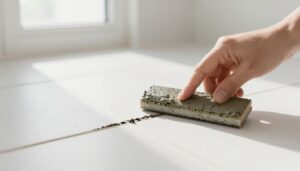
- Scrub gently with a soft brush or microfiber mop. Pay extra attention to grout lines and textured spots.
- Rinse with clean water and a fresh mop, then dry with clean towels if the floor is very porous.
If the floor still looks dark, streaky, or dull after this, the problem might be deep soil, old coatings, or wear in the finish. Professional stone cleaning equipment can pull out compacted soil and mop residue that household tools cannot touch.
Treating Common Stains On Marble And Granite Counters In Cleveland Kitchens
Kitchens see three common types of stains:
- Oil stains: From cooking oils, butter, salad dressing, lotions, or grease. These make the stone look darker in that spot.
- Organic stains: From coffee, tea, wine, berries, or food spills. These leave a colored mark.
- Rust stains: From metal cans, tools, or fixtures sitting wet on the stone.
Homeowners often use a poultice, which is a paste made from a stone-safe powder and a liquid that pulls the stain up from inside the stone. You spread it on the stain, cover it, let it dry, then remove it.
Always follow the product directions and test in a hidden area first. Some poultices are better for oil, others for organic stains.
Remember, etch marks are not stains. If acid has eaten into the marble, no cleaner or poultice will “lift” that mark. The damaged area usually needs professional honing or polishing to bring the shine back.
Hard Water, Soap Scum, And Grout Lines: When DIY Stops Working
Cleveland’s water can leave heavy white deposits around sinks, tubs, and showers. Soap scum and minerals can join together into a hard crust on stone, tile, glass, and grout.
Mild cleaners may not cut through this buildup. Scrubbing harder with rough pads can scratch the stone or tear open grout, which makes it stain faster later.
This is a good point to call a stone and tile specialist. A pro has:
- Strong but stone-safe cleaning products
- Specialized pads and brushes
- Machines that rinse and extract deeply without harming the surface
Professional deep cleaning can restore grout color, remove heavy soap film, and give you a clean base to maintain.
Professional Polishing, Honing, And Restoration For Damaged Stone
Some problems are beyond home cleaning:
- Deep scratches or traffic wear in marble or limestone
- Chips and cracks on edges or corners
- Etched, dull “rings” and large dull patches
- Uneven tiles that create lippage
- Dark, stained grout that will not clean up
Stone restoration pros use machine honing and polishing with diamond abrasives to remove scratches and wear. They can also grind down high tiles, repair chips with color-matched fillers, and recondition dirty grout.
After restoration, they usually apply a sealer to help protect the fresh surface. An experienced local company in Northeast Ohio can look at your floors, counters, or showers and build a plan that fits your home, use level, and budget.
Stone Medics brings over 40 years of stone and tile care to Cleveland homes and businesses, from polishing and sealing to full restoration.
Protecting Your Stone: Sealing, Winter Salt Control, And Long-Term Care In Cleveland
Good care is not only about fixing problems. It is about keeping your stone looking fresh longer, especially in a climate with snow and salt.
Do Your Stone Floors And Counters Need Sealer, And How Often Should You Reapply It?
Sealer does not make stone stain-proof. It makes it more stain-resistant and gives you more time to wipe spills before they soak in.
Stones that often benefit from sealer:
- Granite
- Marble
- Limestone
- Travertine
- Grout around tile and stone
A simple way to tell if sealing is due is the water droplet test:
- Place a few drops of water on a clean, dry area.
- Wait 10 to 15 minutes.
- If the water still beads, the sealer is likely fine.
- If the water has soaked in and darkened the stone, it is time to reseal.
Some kitchen counters need sealing every 1 to 3 years. Busy entry floors may need it more often. Light-use guest baths may go longer. Traffic, cleaning habits, and stone type matter more than the exact calendar date.
Winter Salt, Grit, And Moisture: Special Tips For Cleveland Entryways
Winter is the roughest season for stone in Northeast Ohio.
To protect your entry floors:
- Use sturdy mats outside and inside each entrance.
- Shake or vacuum mats often so they do not become salt pads.
- Wipe up melted snow and slush quickly.
- Mop entry stone with a neutral cleaner that can break down salt residue.
Salt can leave a white haze, weaken some stone surfaces, and eat into grout joints if it sits there. Regular, gentle cleaning during winter keeps this damage from building up.
If your stone already shows a white film that does not wipe away, a professional clean and rinse may be needed to reset the floor.
How Often Should You Schedule Professional Stone Cleaning And Maintenance?
The right schedule depends on how you use the space.
For homes:
- Low-traffic areas may only need professional cleaning and inspection every 1 to 3 years.
- Busy kitchens, entries, and family baths often benefit from yearly deep cleaning and checkups.
For commercial spaces like lobbies, restaurants, condos, or offices:
- High-traffic floors may need professional service several times a year.
- Polished lobby stone might need regular honing and polishing to stay bright and safe.
Regular professional maintenance keeps surfaces looking new and tackles small issues early, before they turn into expensive repairs or replacement.
Conclusion
Stone in a Cleveland home or building can stay beautiful for many years if you know what you have, clean it gently, and protect it from harsh products, grit, and salt. Simple daily habits, smart weekly routines, and timely sealing go a long way toward keeping your floors, counters, and showers looking their best.
When stains, etches, or heavy buildup show up, you do not have to guess or live with damage. Walk through your home or property and decide which surfaces you feel comfortable caring for yourself and which ones might benefit from a professional evaluation.
If you are ready for deep cleaning, polishing, or full restoration, reach out to a trusted Cleveland stone specialist like Stone Medics for an inspection and a clear maintenance plan that fits your space and your schedule. Your stone can shine again, even in Northeast Ohio’s tough climate.