
Fall brings cooler temperatures, colorful leaves, and plenty of seasonal cleanup. But if your property has natural stone patios, walkways, steps, entryways, or other exterior surfaces, autumn can also create maintenance challenges that are easy to overlook.
Fallen leaves, rain, dirt, organic debris, and moisture can sit on outdoor stone for extended periods. Depending on the type and condition of the stone, that buildup can contribute to staining, discoloration, embedded dirt, and a generally weathered appearance.
For homeowners in the Cleveland area, fall is an important time to inspect exterior stone before winter arrives.
At Stone Medics, we work with natural stone surfaces that have experienced wear, staining, dullness, and other problems. Understanding what happens to exterior stone during fall can help you recognize when routine cleaning is enough—and when the surface may need professional attention.
1. Fallen Leaves Can Leave More Than a Mess
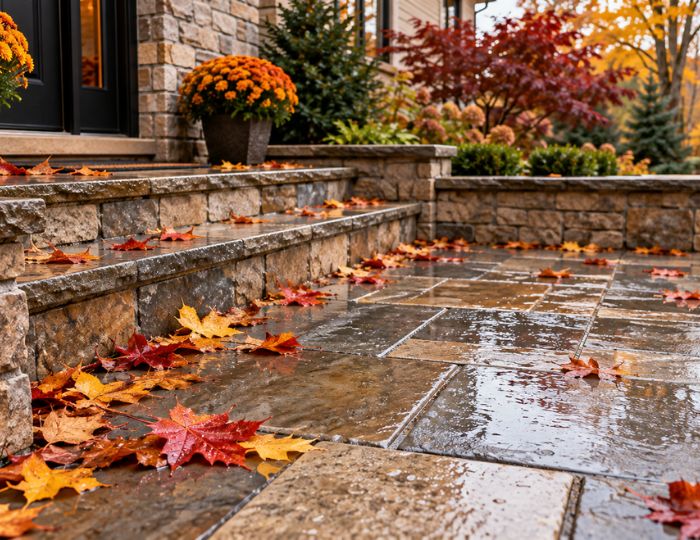
A layer of colorful leaves may look harmless, but allowing wet leaves and organic debris to remain on stone surfaces isn’t ideal.
Once leaves become saturated by rain, they can remain pressed against patios, walkways, and steps. Moisture and organic material may leave discoloration behind, particularly when debris sits undisturbed for an extended period.
The issue can become more noticeable when leaves collect in corners, along edges, between stones, or in other areas that don’t dry quickly.
Regularly removing leaves from exterior stone is one of the simplest ways to reduce prolonged contact between the surface and damp organic debris.
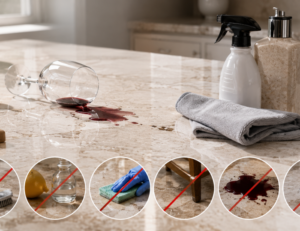
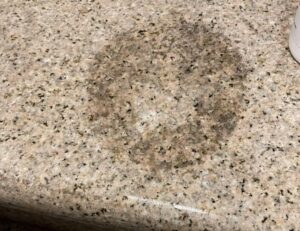
If staining has already developed, avoid immediately reaching for an aggressive household cleaner. Natural stone requires appropriate care, and the right approach depends on both the stone and the problem you’re trying to correct.
Stone Medics’ guide to whether you can remove a stain from a stone countertop explains why understanding the nature of a stain matters before attempting treatment.
2. Fall Rain Can Keep Exterior Stone Damp
Rain is another major part of the fall season.
Outdoor stone is naturally exposed to the elements, but repeated wet conditions combined with cooler temperatures can mean surfaces take longer to dry.
That becomes more important when water is combined with leaves, dirt, mud, and other debris.
Watch Areas Where Water and Debris Collect
As you inspect your exterior stone, pay particular attention to locations where water tends to remain after rainfall.
Look at:
- Low spots on patios and walkways
- Corners where leaves collect
- Stone near downspouts or drainage areas
- Steps and entryways exposed to weather
- Shaded areas that remain damp longer
- Joints and edges where debris accumulates
The goal isn’t to keep outdoor stone perfectly dry. That’s unrealistic. Instead, watch for areas where moisture and debris repeatedly remain on the surface.
If the stone already looks significantly weathered or damaged, professional stone restoration may be more appropriate than simply cleaning the surface.
3. Dirt and Debris Can Make Stone Look Dull and Neglected
Fall doesn’t just bring leaves.
Wind and rain can carry soil, dust, plant material, and other debris onto stone surfaces. Foot traffic can then spread that material across entryways, steps, and walkways.
Over time, buildup can change the appearance of the stone and make a once-attractive surface look dirty or dull.
Homeowners sometimes respond by scrubbing more aggressively or experimenting with stronger cleaning products. With natural stone, that’s not always the right solution.
Different materials have different characteristics. The cleaning method that works for one household surface may not be appropriate for marble, limestone, travertine, slate, granite, or another type of stone.
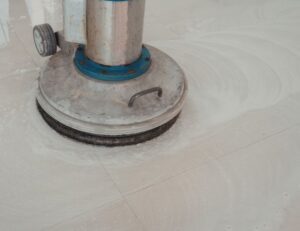
Professional stone cleaning is designed around the needs of stone surfaces rather than treating them like ordinary flooring or concrete.
4. The Wrong Fall Cleaning Method Can Create Another Problem
Cleaning natural stone is not simply a matter of finding the strongest product available.
Some stone surfaces can be sensitive to inappropriate cleaners and cleaning techniques. That’s why identifying the material you’re working with is important before attempting to remove stubborn buildup or discoloration.
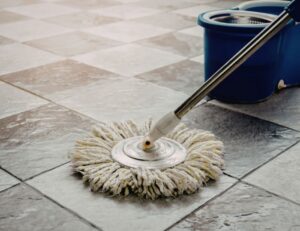
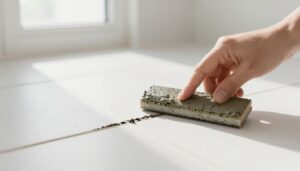
For routine care, start by removing loose debris and following appropriate cleaning practices for your particular surface.
For more detailed guidance, Stone Medics has a resource on how to clean stone surfaces.
It’s also important to understand the difference between cleaning a dirty surface and correcting damage.
Cleaning, polishing, and restoration address different conditions. If you’re unsure which your stone needs, review our explanation of stone cleaning vs. polishing vs. restoration.
5. Sealing Should Be Part of the Conversation
Fall is also a good time to think about the condition of your stone’s protection.
Natural stone surfaces may benefit from sealing depending on the material, location, condition, and use. A sealer is not a substitute for proper maintenance, nor does it mean a surface becomes impossible to stain.
Instead of assuming every surface needs another application, determine whether sealing is appropriate for the stone you have.
Our guide explaining whether sealing stone surfaces is necessary provides more information about this decision.
For surfaces where sealing is appropriate, Stone Medics also provides professional stone sealing services.
Don’t Wait for Visible Damage to Think About Maintenance
Stone maintenance is easier to manage when you’re paying attention to the surface throughout the year.
Look for changes in appearance, recurring staining, areas that are becoming harder to clean, or surfaces that no longer look the way they once did.
A proactive stone maintenance plan can help address ongoing care rather than waiting until significant restoration becomes necessary.
6. Existing Damage Can Become More Obvious in Fall
Seasonal cleanup is a good opportunity to look closely at exterior stone.
Once leaves and debris have been removed, you may notice problems that weren’t obvious during summer.
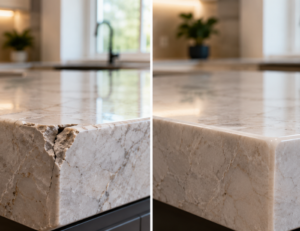
Look for staining, discoloration, chips, cracks, worn areas, uneven appearance, and other changes in the stone.
Not every imperfection means the entire surface needs to be replaced. Depending on the material and extent of the problem, damaged natural stone may sometimes be repairable.
If you’re seeing physical damage, learn more about whether cracked or chipped natural stone can be repaired.
For broader deterioration, our guide to restoring exterior stone explains more about bringing weathered outdoor surfaces back to life.
7. Different Types of Stone Need Appropriate Care
“Natural stone” covers many different materials, and they shouldn’t automatically be treated the same way.
For example, a homeowner may have granite around one part of the property and slate in another. Each surface can have different characteristics and maintenance needs.
Stone Medics provides specialized services for materials including granite and slate, along with other natural stone surfaces.
That’s why identifying the stone is an important part of determining how to clean, maintain, or restore it.
When you’re unsure what material you have or why the surface has changed, professional evaluation can help prevent trial-and-error cleaning from becoming an additional problem.
Prepare Exterior Stone Before Cleveland Winter Weather Arrives
Fall maintenance isn’t only about making patios, walkways, steps, and entryways look cleaner.
It’s an opportunity to remove seasonal buildup, inspect the condition of your stone, identify stains or damage, and address concerns before winter weather arrives.
Start with basic housekeeping. Remove leaves and loose debris regularly, keep an eye on areas where moisture collects, and avoid using harsh products simply because a stain or dirty area is difficult to remove.
Then take a closer look at the surface itself.
If you’re seeing staining, deterioration, or other problems that ordinary maintenance isn’t resolving, contact Stone Medics to discuss professional stone care.
Key Takeaways
Fall leaves, rain, dirt, and organic debris can create maintenance challenges for exterior natural stone, particularly when wet material remains on a surface for long periods.
Regular debris removal is a simple first step. Homeowners should also watch areas where water and leaves repeatedly collect and use cleaning methods appropriate for their specific type of stone.
Sealing may be appropriate for some stone surfaces, but it should be considered as part of an overall maintenance strategy rather than viewed as a replacement for proper care.
Fall is also an ideal time to inspect patios, walkways, steps, and other exterior stone for stains, chips, cracks, discoloration, or weathering.
For homeowners dealing with stone that has already lost its original appearance, Stone Medics provides professional stone care throughout its service areas.